
From No Cooling to a New Lennox AC Installation in Ancaster


AirPro Heating & Cooling recently received an AC repair call from an Ancaster homeowner whose air conditioner was running but no longer cooling the home.
Both the indoor blower and outdoor condenser fan were operating, and airflow from the supply vents appeared normal. However, the air coming from the vents was not cold. Further testing found no pressure remaining in the refrigeration system, indicating that the refrigerant had escaped through a significant leak.
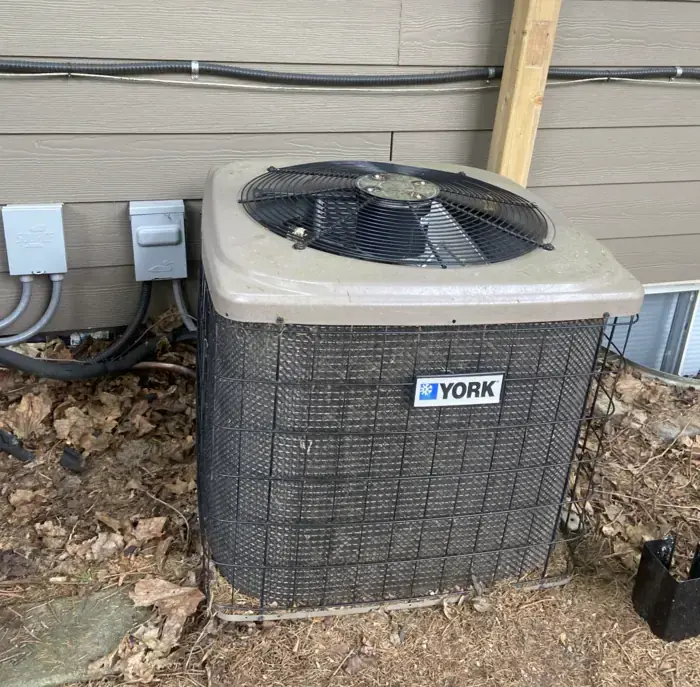
After pressure-testing the system with dry nitrogen, the leak was traced to the outdoor condenser coil. Because the existing York air conditioner was approximately 13 years old, the homeowner decided that replacing the system was more practical than investing in a major condenser repair.
The old equipment was removed and replaced with a new Lennox air conditioner.
The Initial Complaint: AC Running but Not Cooling
An air conditioner can appear to be operating normally while providing little or no cooling.
The thermostat may call for cooling, the indoor blower may move air through the ductwork, and the outdoor condenser fan may continue running. However, fan operation alone does not mean the refrigeration system is working correctly.
During our initial inspection, we confirmed:
The thermostat was calling for cooling
The indoor blower was operating
The outdoor condenser fan was running
Airflow from the supply vents was present
The air conditioner was not producing cold air
Because the basic operating sequence and indoor airflow appeared normal, the next step was to check the refrigeration system.
Refrigerant Pressure Check Revealed an Empty System
When refrigerant pressure was checked, no pressure remained in the system.
Air conditioners do not normally consume refrigerant. The refrigerant circulates continuously inside a sealed system. If an air conditioner has lost its entire refrigerant charge, the system has developed a significant leak or experienced another major loss of refrigerant.
Simply adding refrigerant would not provide a proper or lasting repair. Before deciding what to do, the source of the leak needed to be identified.
Nitrogen Testing Confirmed a Condenser Coil Leak
The refrigeration system was pressurized with dry nitrogen to locate the source of the refrigerant loss.
Nitrogen pressure testing allows the refrigeration circuit to be checked for leaks without adding refrigerant to a system that cannot hold a charge. Testing confirmed that the outdoor condenser coil was leaking.
The condenser coil is a major component of the outdoor AC unit. It releases the heat absorbed from inside the home and allows the refrigerant to complete the cooling cycle.
Once the condenser coil developed a substantial leak and the refrigerant escaped, the air conditioner could no longer provide cooling—even though the indoor and outdoor fans continued to run.
Repair or Replace a 13-Year-Old Air Conditioner?
A refrigerant leak does not automatically mean the complete air conditioner must be replaced. The right decision depends on the location of the leak, the age and condition of the equipment, the refrigerant type and the cost of repair.
In this case, several factors supported replacement:
The existing York air conditioner was approximately 13 years old
The system had lost its complete refrigerant charge
The leak was located in the outdoor condenser coil
Condenser coil repair or replacement would be a major investment
The compressor and other original components were also 13 years old
A major repair would not provide a new-system warranty
Replacement offered better long-term value
The diagnostic findings and available options were explained to the homeowner. After considering the age and condition of the existing system, the homeowner chose to replace it with a new Lennox air conditioner.
Removing the Existing York Air Conditioner
The old York condenser was disconnected and removed from the installation area.
After removing the equipment, we inspected the existing refrigerant lines, electrical connections and surrounding installation area. The old base was replaced with a new condenser pad to provide a clean, stable and level foundation for the new outdoor unit.
Correct equipment placement is important. The condenser must remain level and have sufficient clearance for airflow, servicing and future maintenance.

Installing the New Lennox Air Conditioner
The new Lennox condenser was positioned on the prepared pad and connected to the home’s cooling system.
The installation included:
Removing the old outdoor condenser
Inspecting and preparing the installation area
Installing a new condenser pad
Positioning and levelling the new Lennox unit
Completing the refrigerant-line connections
Connecting the electrical supply and disconnect
Checking indoor airflow and condensate drainage
Starting and testing the complete air-conditioning system
The new air conditioner was selected to match the home’s cooling requirements and compatible indoor equipment.
Proper equipment sizing and system compatibility are important. Installing a replacement based only on the physical size of the old unit can result in short cycling, poor humidity control, uneven temperatures or unnecessary energy consumption.

Leak Testing, Evacuation and System Commissioning
Positioning and connecting the equipment are only part of a professional AC replacement. The refrigeration circuit must also be tested and properly prepared before the system is placed into normal operation.
After the refrigerant connections were completed, the system was checked for leaks and evacuated to remove air and moisture from the refrigeration circuit.
The new Lennox system was then started and commissioned.
Final operating checks included:
Refrigerant pressures
Suction-line and liquid-line temperatures
Superheat and subcooling, where applicable
Indoor return- and supply-air temperatures
Indoor and outdoor fan operation
Compressor operation
Electrical operation
Condensate drainage
Overall cooling performance
Refrigerant pressures alone do not provide a complete evaluation. The readings must be considered together with indoor airflow, indoor and outdoor temperatures, cooling load and manufacturer specifications.
Final testing confirmed that the new Lennox air conditioner was operating correctly and providing proper cooling to the Ancaster home.

Signs Your AC May Have Lost Refrigerant
A refrigerant leak can produce several different symptoms. Your air conditioner may need professional diagnosis if you notice:
The AC runs but does not cool
Warm or room-temperature air comes from the vents
Cooling performance gradually becomes weaker
The system runs for unusually long periods
Ice forms on the refrigerant line or indoor evaporator coil
The outdoor unit runs while the indoor temperature continues rising
The system requires repeated refrigerant charging
Hissing or bubbling sounds are present near a coil or refrigerant line
Refrigerant should not be added repeatedly without identifying why it was lost. If an air conditioner requires additional refrigerant, the cause should be properly diagnosed.
When Does AC Replacement Make More Sense?
Not every older air conditioner needs to be replaced. A smaller electrical or mechanical failure may still be economical to repair, even on an older system.
Replacement may provide better value when the system requires a major refrigeration repair. Important factors include:
Equipment age
Location and severity of the refrigerant leak
Condition of the compressor
Refrigerant type
Repair history
Parts availability
Remaining warranty coverage
Repair cost compared with replacement
Overall energy efficiency
A replacement recommendation should be based on actual diagnostic findings—not the age of the equipment alone.
In this case, the combination of a leaking condenser coil, complete loss of refrigerant and the system’s 13-year age made replacement the more practical long-term choice.
AC Repair and Replacement in Ancaster
This service call began with a common complaint: the air conditioner was running, but the home was not getting cold.
Although both fans were operating and indoor airflow appeared normal, refrigeration testing showed that the system had lost its complete charge. Nitrogen pressure testing then confirmed that the outdoor condenser coil was leaking.
The 13-year-old York air conditioner was removed, a new condenser pad was installed, and the home was upgraded with a new Lennox AC system. After installation, the system was fully tested to confirm proper operation and cooling performance.
AirPro Heating & Cooling provides professional AC diagnostics, repair and replacement in Ancaster, Hamilton, Dundas, Burlington, Stoney Creek and surrounding areas.
Is your air conditioner running but not cooling? Contact AirPro Heating & Cooling for professional AC service in Ancaster and straightforward repair or replacement advice.


Comments